Your Waynesville Address Says 28786. It Doesn't Say Who Taxes You.
August 27, 2026
August 27, 2026
On February 24, 2026, the Waynesville Town Council held a public hearing on a petition that most people driving past Ratcliff Cove Road would never notice. Two property owners, Tribrook Farms LLC and Al & Charlies Mountain LLC, had asked the town to annex the western portion of a 57.51-acre parcel at 192 Ratcliff Cove Road. The land is set to become Phase II of the Valleywood Farms subdivision, adding 148 single-family lots next to the 115 already built in Phase I. Once the annexation is final, the agenda notes, the property becomes eligible for municipal services, including sewer, and falls under the town's jurisdiction for the first time.
Nothing about that parcel's mailing address will change. It will still say Waynesville, NC 28786, the same way it does today. What changes is which government taxes it, which office inspects the plumbing, and who shows up if the sewer backs up.
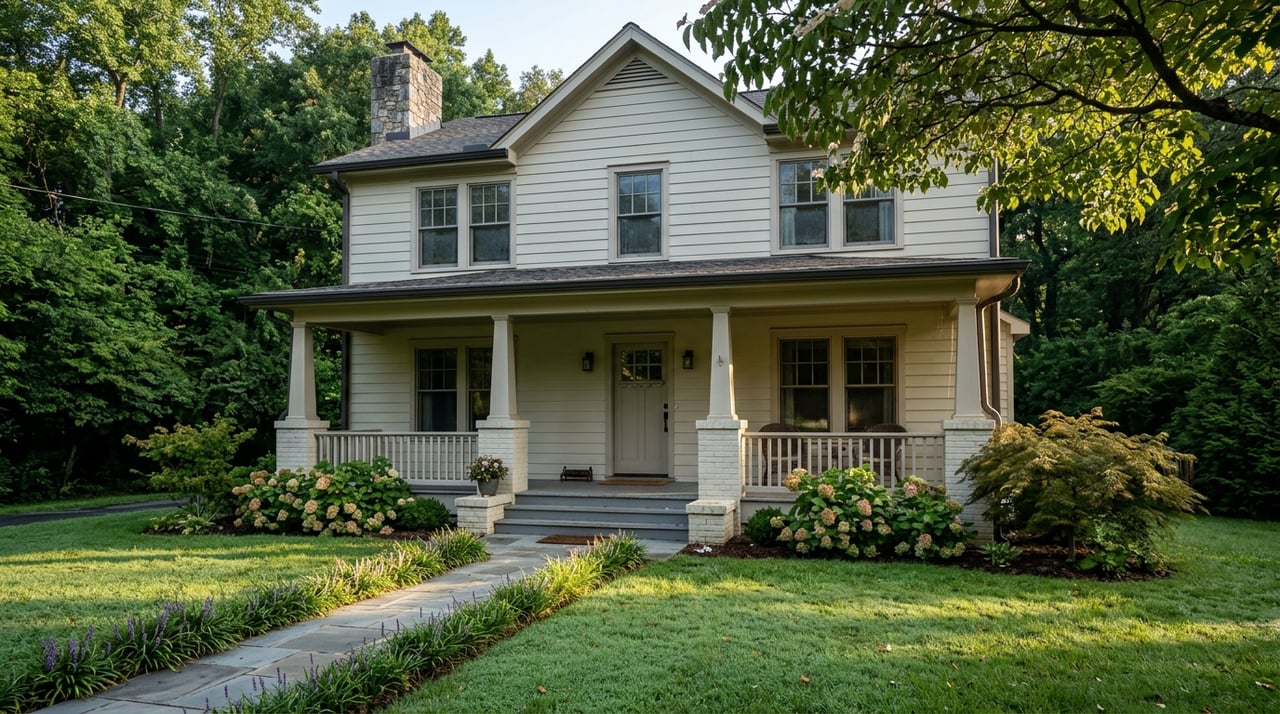
That distinction, the one a listing photo can't show you, is the whole story for anyone comparing homes in this area.
A Waynesville mailing address tells you which post office sorts your mail. It does not tell you whether your property sits inside the incorporated Town of Waynesville or in unincorporated Haywood County. Those are two different lines, and a huge share of homes carrying a Waynesville address sit on the county side of it.
Inside the line, you pay county property tax and town property tax. Outside it, you generally pay county tax alone, sometimes with a fire district tax layered on depending on which volunteer district covers your parcel. The town's finance office is direct about this: property owners inside city limits are required to pay municipal taxes in addition to whatever Haywood County bills. The town does not assess your property or set your value. It just applies its own rate on top of the county's number.
The town's currently posted rate is 47.90 cents per $100 of assessed value. Haywood County's base rate, last published for the 2023-2024 fiscal year, sits at 55 cents per $100, plus a small fire district charge in some areas.
Run that math on a hypothetical $400,000 home and the gap stops being abstract. Inside town limits, you'd owe roughly $1,916 in town tax and $2,200 in county tax, for a combined bill near $4,116 a year. Sitting just outside that same line, on an otherwise identical $400,000 home, you'd owe the county portion alone, around $2,200. None of this is tax advice, it's arithmetic built from two public rate schedules, and your actual bill depends on your assessed value and whichever fire district applies. Always confirm the current number with the Haywood County Tax Assessor's office before you factor it into an offer.
| Inside Town Limits | Unincorporated Haywood County | |
|---|---|---|
| Property tax | County tax + town tax (47.90¢/$100) | County tax only, plus fire district tax where applicable |
| Illustrative tax on a $400,000 home | ~$4,116/year | ~$2,200/year |
| Water, sewer, garbage | Town of Waynesville | Town (extended service in some areas), Junaluska Sanitary District, or private well and septic |
| Building permits | Town of Waynesville Development Services, 9 South Main Street | Haywood County Inspections Department, with separate carve-outs for Maggie Valley and Lake Junaluska Assembly Grounds |
| Annexation status | Already inside | Can shift through a Town Council petition, as is happening now on Ratcliff Cove Road |
The town line does not know what a listing photo looks like. It knows exactly one thing: which side of a surveyed boundary your parcel sits on.
Here's the part most buyers miss entirely. That boundary moves. Annexation is a live, ongoing process, not a historical artifact. The Ratcliff Cove Road petition is one active example, but it's not unusual. A property owner or developer petitions the town, the council calls a public hearing, and if approved, the parcel crosses from county jurisdiction into town jurisdiction, sometimes years after the original owner bought it under a completely different tax and service arrangement.
If you're eyeing a lot in a newer subdivision that's still expanding, like Phase II of Valleywood Farms, ask directly whether the section you're considering is already annexed or still pending. A lot that closes today under county tax rates could be paying town tax within a year or two if the petition goes through. That's not a hidden fee, it's a hidden timeline, and it's worth asking about before you sign rather than after your first town tax bill arrives.
The boundary questions don't stop at taxes. The Town of Waynesville maintains an estimated 143 miles of water line and 69 miles of sewer line, and it serves plenty of customers who live outside its own corporate limits, including Lake Junaluska Assembly and the Junaluska Sanitary District. So a home outside the tax boundary might still be inside the utility service area, or it might not be, and the only way to know is to ask.
There's a wrinkle here that says something about how these arrangements actually get set. Under the town's fee schedule, new sewer connections coming from the tributary systems of Junaluska Sanitary District, the Town of Clyde, or Maggie Valley are billed the capacity fee at the town's "outside" rate. Lake Junaluska Assembly, by contrast, gets the "inside" rate, and the reason traces back decades: the fee schedule credits the Assembly's participation between 1942 and 1990 in funding the original sewer trunk and treatment plant. A financial decision made by a religious retreat community over eighty years ago is still shaping what a new sewer connection costs today. These rates aren't just about geography. They're about who paid into the system and when.
The same line splits who reviews your building permit. Haywood County's Inspections Department handles permitting for the entire county with specific exceptions: Town of Waynesville, inside its city limits and extraterritorial jurisdiction, runs its own building inspections through Development Services on South Main Street. Maggie Valley and the Lake Junaluska Assembly Grounds have their own separate arrangements too.
That matters most if you're planning any renovation, addition, or new construction. Outside town limits, a lot of homes run on private well and septic rather than municipal water and sewer, and Haywood County Environmental Health handles those permits and inspections. The county is explicit that septic and well approvals may need to clear before certain construction permits move forward. If you're budgeting a project timeline, that's a sequencing detail worth knowing before you close, not after your contractor calls asking who has jurisdiction.
You don't need to guess at any of this. A few concrete steps settle it:
None of this makes one side of the line better than the other. Plenty of buyers choose unincorporated Haywood County on purpose, for more land, a private well, or lower combined taxes. Others want the paved sidewalks, town water pressure, and proximity that come with being inside the line. The point isn't which side wins. It's that the mailing address won't tell you which side you're on, and the difference shows up on your first tax bill either way.
How can I find out if a specific Haywood County property is inside Waynesville's town limits? Pull up the property on Haywood County's GIS mapping system and turn on the zoning layer, which shows town boundaries directly. You can also call Waynesville's Development Services office and ask them to confirm based on the parcel number.
If a home sits just outside the current town line, could it be annexed into Waynesville later? Yes. Annexation happens through a petition and a Town Council public hearing, the same process underway right now for the Valleywood Farms Phase II expansion on Ratcliff Cove Road. A property's status today isn't necessarily its status in five years.
Does living outside town limits guarantee I'll avoid Waynesville water and sewer bills? No. The town's service area extends beyond its taxing boundary. Lake Junaluska Assembly and the Junaluska Sanitary District both receive Town of Waynesville water and sewer service despite sitting outside the corporate limits, so utility provider and tax jurisdiction have to be checked separately.
If you're comparing homes around Waynesville and want someone to walk the parcel-level details with you before you write an offer, Catherine Proben has spent two decades sorting exactly this kind of local detail out for buyers across Haywood County. Schedule a free consultation and bring your list of addresses. We'll figure out which line each one actually sits on.
Stay up to date on the latest real estate trends.
Experience a real estate partnership built on trust, expertise, and genuine care. Catherine brings a lifelong understanding of what “home” truly means, guiding you through every step of your real estate journey with personalized service and dedication.
Get In Touch With Our Team To Learn More
CATHERINE PROBEN
ADDRESS 74 N Main St Waynesville, NC 28786